 PartDorinUpload RFQRFQ
Chinese SUV parts matching: TIGGO, Coolray, H6 and JOLION
Popular Chinese SUV badges cover multiple generations and powertrains. Use a repeatable identity and technical-review process for every line.
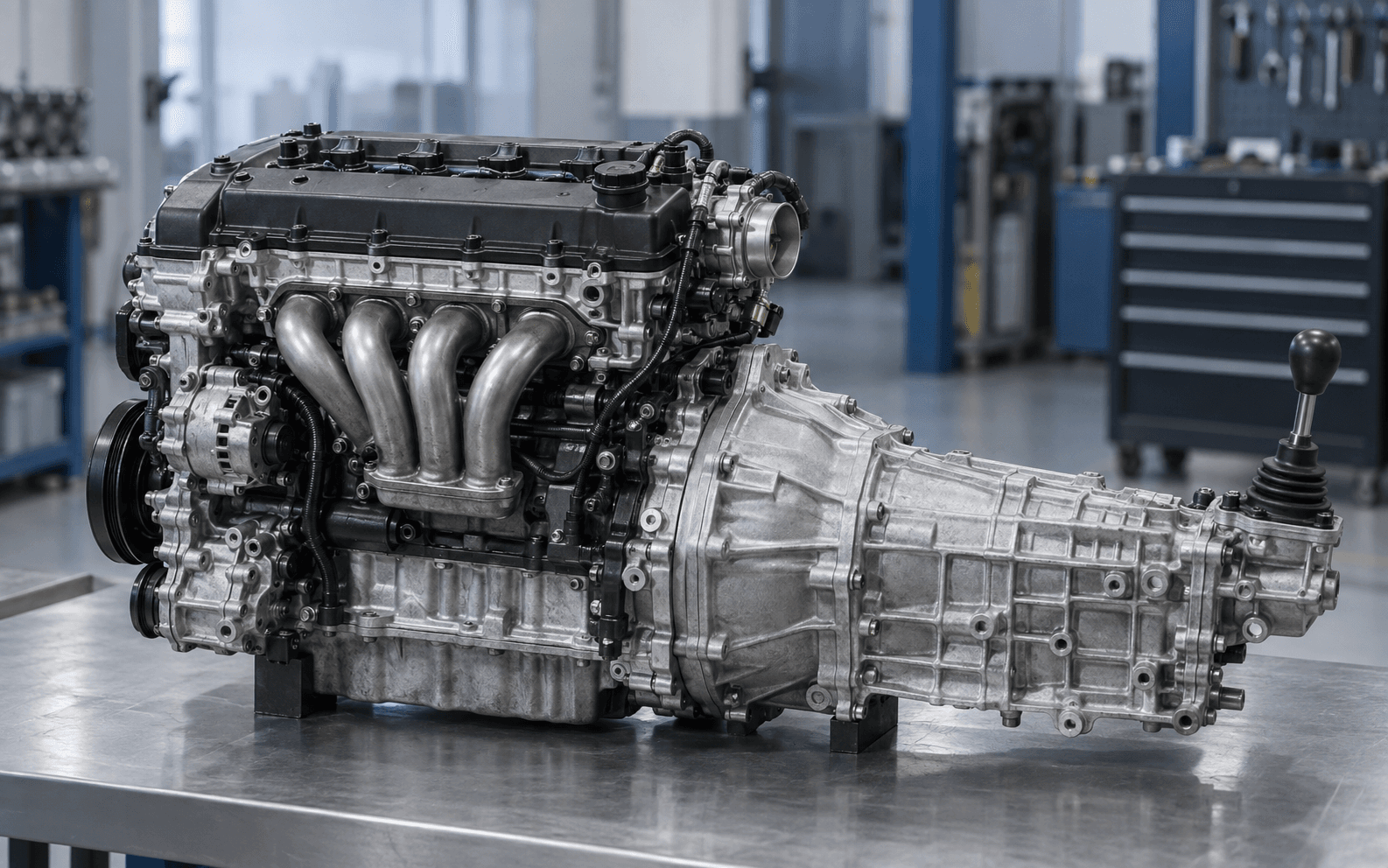
For Chinese SUV parts matching, identify the exact TIGGO 7 or 8, Geely Coolray, HAVAL H6 or JOLION by VIN, market, build date, engine or hybrid system, transmission and drive layout. Add the OE number and physical interfaces. Never combine badge-level fitment claims across generations or petrol, HEV and PHEV versions.
Short answer: match the configuration, not only the SUV badge
For Chinese SUV parts matching, identify the exact Chery TIGGO 7 or TIGGO 8, Geely Coolray, HAVAL H6 or HAVAL JOLION by VIN, original market, production date, engine or hybrid system, transmission, drive layout and steering side. Add the complete OE reference, product position and clear photographs. Keep petrol, HEV and PHEV applications, generations and regional model names separate until a part-specific source proves interchangeability.
These SUVs are sold across many markets and have evolved through different powertrains and equipment packages. A familiar badge can therefore be useful for discovery while remaining too broad for ordering. The sourcing process should narrow the vehicle first, define the exact service item second, and compare the decisive interfaces third. Only then should price, MOQ and packaging be treated as comparable.
This guide supports B2B enquiry preparation and independent sourcing. It is not an official parts catalogue for Chery, Geely or GWM/HAVAL. Safety-relevant, electronic and electrified-vehicle systems require authoritative data, qualified review and destination-market compliance.
Build one identity record for every requested part
Use one spreadsheet row per sellable SKU and record:
- Complete 17-character VIN and permitted source image.
- Exact regional model and generation wording.
- Original sales market, destination market and steering side.
- Physical build date and model year.
- Engine code or hybrid type, transmission and 2WD/4WD layout.
- OE reference exactly as printed and its source.
- Product category, axle, side and vehicle position.
- Label, connector, mount, port and overall photographs.
- Included accessories and assembly boundary.
- Quantity, packaging, documentation and open questions.
When a field is unavailable, do not replace it with an assumption. Ask which detail separates the supplier’s candidates. The Chinese car parts VIN and OE matching guide explains how to move a relationship from candidate to reviewed and approved.
Chery TIGGO 7 parts: control generation and powertrain naming
TIGGO 7 applications may appear as TIGGO 7, Pro or CSH and can vary by country. Chery’s official TIGGO 7 CSH page demonstrates that electrified variants need a clear identity rather than being grouped under one badge. Start a request with the Chery TIGGO 7 parts page, then add engine or hybrid system, gearbox, market and build date.
For engine-service parts, record engine code, induction, emissions context and production range. A filter may be simple to compare, while an ignition coil, sensor or mount requires connector and geometry review. For hybrid cooling or electrical parts, identify the exact circuit and use trained high-voltage personnel.
For front and rear chassis parts, confirm brake package, axle, side, drive layout, wheel-end interfaces and electronic features. For lamps and body parts, add market, trim, sensor holes, camera provision, connector and traffic-side function. Do not transfer a TIGGO 7 Pro application to CSH because the exterior family looks related.
Chery TIGGO 8 parts: define body, seating and drivetrain
The TIGGO 8 family includes market-specific Pro, Pro Max and CSH naming. Chery’s official TIGGO 8 model information provides model context, but the service request still needs its own vehicle record. Use the Chery TIGGO 8 parts page for the initial checklist.
Record engine or electrified powertrain, transmission, 2WD/4WD layout, seating and production date. Seating and trim can affect interior, restraint and rear-body components. Drive layout can affect shafts, hubs, differential-related parts, suspension and underbody items. Powertrain changes can affect cooling, HVAC and electrical architecture.
For a mixed TIGGO 7 and TIGGO 8 order, do not combine visually similar filters, brake parts or body items in one application row. A shared supplier family number may be valid, but the buyer should retain distinct vehicle records and an explicit cross-reference. This protects later catalogue updates if one model changes.
Geely Coolray parts: identify the generation and market equipment
The official Geely Coolray page presents the current global model and notes that actual configuration depends on market. For sourcing, record generation, engine, transmission, production date, destination-market equipment and the full OE reference. The Geely Coolray parts page provides a model-specific RFQ route.
For powertrain parts, include engine code and gearbox rather than only displacement. For cooling and HVAC parts, compare ports, mounts, fan or control configuration and included sensors. For brakes and suspension, add axle, side, dimensions and wheel or brake package where relevant.
Body panels, lamps, bumpers, mirrors and windscreens may interact with cameras, radar or warning systems. Specify sensor or camera provisions and follow authoritative calibration procedures after replacement. A bumper cover with matching external shape may still lack the correct brackets or apertures.
HAVAL H6 parts: separate generation, petrol, HEV and PHEV
HAVAL H6 is a high-risk badge-level search because generations and powertrains differ. GWM’s official communications show H6 and JOLION offered in multiple electrified configurations across markets; buyers should use the local model and VIN as the decision baseline. Begin with the HAVAL H6 parts page.
For an H6 request, record generation, petrol/HEV/PHEV type, engine or hybrid system, transmission, 2WD/4WD and market. A PHEV charging or battery-related part must not inherit an HEV or petrol application. Cooling assemblies, compressors, brake systems and electronic modules may also differ because they interact with the powertrain architecture.
For mechanical drivetrain parts, specify driven axle, gearbox and ratio or code where relevant. For suspension, hubs and brakes, add wheel or brake package, axle and side. For body and lighting, capture production date, trim, market function, camera or radar provision and connector.
HAVAL JOLION parts: keep petrol and hybrid records distinct
JOLION petrol and hybrid versions can share styling while using different powertrain, cooling, electrical and service components. Use the HAVAL JOLION parts page, record the exact market designation and add engine or hybrid type, transmission, build date and OE reference.
Routine service items still need part-level confirmation. A filter, spark plug or ignition component applies only to the relevant combustion-engine condition. A hybrid cooling valve, electric compressor or power-electronic part needs system-specific evidence. Do not simplify both vehicles to “Jolion 1.5” if the actual architecture differs.
For chassis and body items, confirm whether the market or trim changes the brake package, suspension, lamp, mirror or ADAS equipment. Write exclusions into the application record. “Fits JOLION petrol, not confirmed for HEV” is a more trustworthy catalogue statement than an unsupported all-model claim.
Powertrain and transmission matching checklist
For engines, transmissions, clutches, differentials and drive shafts, provide:
- VIN, exact model, market and build date.
- Engine or hybrid-system code and fuel/energy type.
- Transmission type and code.
- 2WD/4WD and driven axle.
- Complete assembly code and OE reference.
- Mount, flange, spline, connector and sensor photographs.
- Required subassemblies and excluded accessories.
Define the assembly boundary before comparing prices. One transmission quotation may include sensors and actuators while another covers the basic mechanical assembly. An engine may be bare, long block or supplied with external accessories. State preservation, clean caps, transport frame and lifting/handling requirements for heavy assemblies.
For a used sample or removed assembly, record wear and repair history where known. A casting number can identify a family without proving the internal ratio or specification. Use controlled service or engineering evidence for internal characteristics that cannot be established from an exterior photograph.
Brake, suspension, steering and wheel-end matching
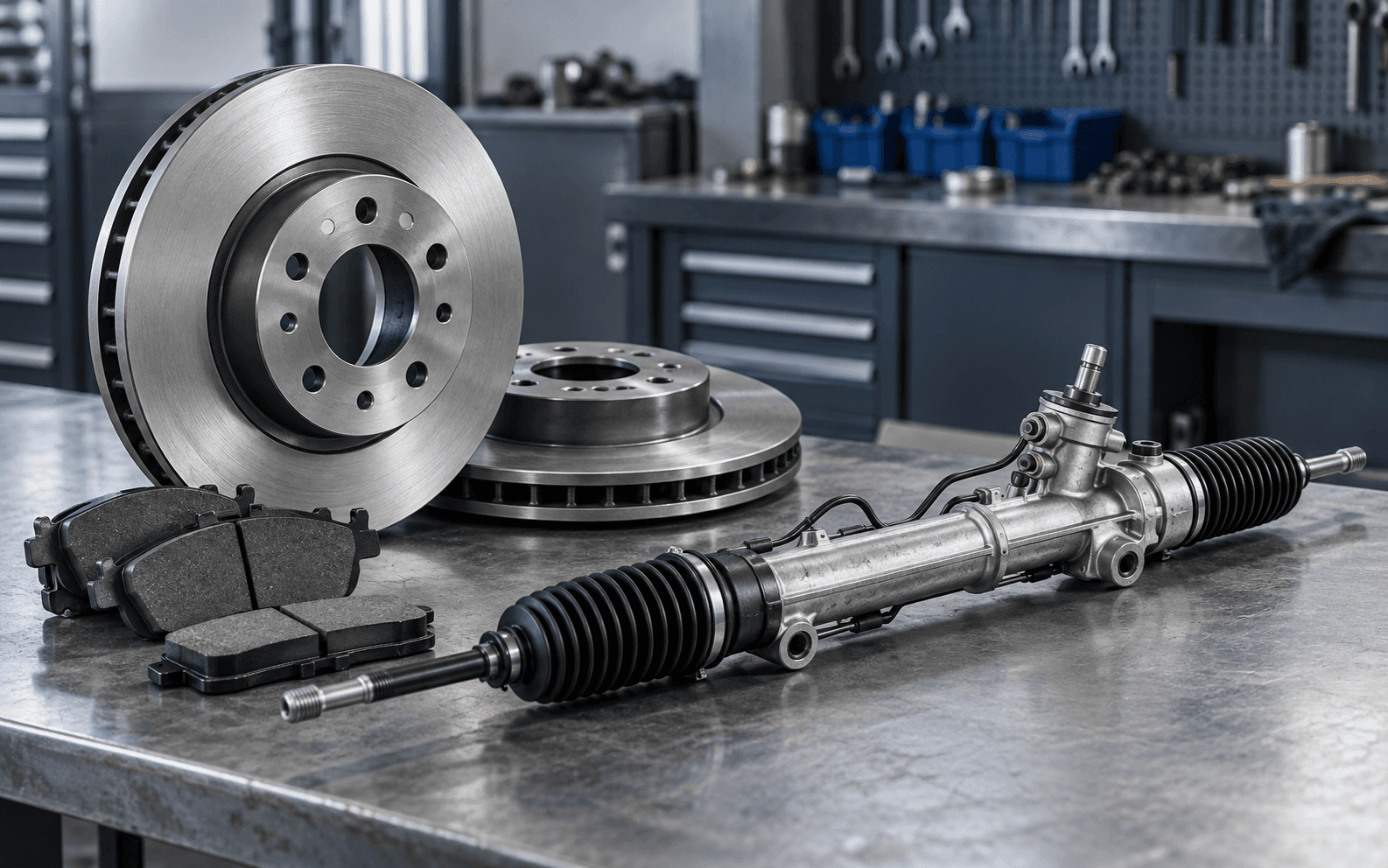
Start with axle and side, then add brake or steering system variant, physical dimensions, mounting geometry and electronic features. For brake pads and discs, compare the caliper or brake package, backing plate or disc dimensions and sensor/hardware content. For calipers, specify body-only versus carrier-included scope, parking-brake actuator and left/right orientation.
For control arms, ball joints, dampers and springs, record driven axle, load or trim condition where it affects the application, mount types and included bushings or hardware. For hubs and bearings, compare flange, bolt pattern, dimensions and speed-sensor arrangement. For steering racks or columns, add steering side, mounts, assist type, connectors and sensor condition.
These are safety-relevant systems. Require category-appropriate validation and qualified installation. A photograph can support identity but cannot prove material, heat treatment, damping, friction or functional performance.
Share the reference, vehicle application and target quantity so the technical and packing questions can be reviewed against your actual order.
Upload Your RFQCooling and automotive air-conditioning matching
Identify the powertrain and thermal circuit first. For radiators, condensers, intercoolers and heat exchangers, compare core dimensions, ports, mounts, cooler connections, sensors and fan provisions. For hoses and thermostats, add route, diameter, branches and connector or housing details.
For compressors, record mechanical or electric type, voltage/system context, pulley or drive condition, refrigerant ports, mounts, connector and control. For heater cores and blowers, compare case geometry, ports, wheel, rotation, motor and controller. A correct outer dimension is only one part of the match.
Specify cleanliness, leakage or function checks appropriate to the product and agreed by competent personnel. In packing, protect fins, ports and sealing faces. Shipment inspection should confirm clean caps, accessory seals, label identity and the absence of handling damage.
A mixed-model RFQ matrix that suppliers can answer
Build the RFQ in four layers:
- Vehicle layer: VIN, model, market, build date, powertrain, transmission, drive and steering side.
- Product layer: OE reference, category, position, assembly boundary and decisive interfaces.
- Commercial layer: quantity, quality position, packaging, labels, destination and required timeline.
- Evidence layer: reference source, photos, drawings, sample status, test or inspection request and open questions.
Ask the supplier to return one row per offer with its own part number, confirmed application, exclusions, included accessories, sample or drawing availability, MOQ, lead-time basis and packing. Do not accept a summary “all fit” response for a mixed vehicle list. If one supplier code covers several models, ask for the evidence and keep each model as a separate approved application record.
The automotive spare-parts RFQ template helps structure the full request, while the export vehicle variant guide explains cross-market controls.
Sample approval and factory testing
Approve a sample against a named vehicle and product baseline. Record part number, marking, dimensions or interfaces checked, accessory content and any functional test. “Passed factory testing” is incomplete unless the characteristic, method, sample size and acceptance criterion are stated.
For a brake disc, measurement may include the dimensions decisive for the application. For a lamp, the review may include housing, mount, connector, function and marking. For a radiator, it may include ports, core, mounts and a defined leakage check. The exact plan should be appropriate to the product and market.
An installation check on one vehicle supports only the recorded configuration and test scope. It should not automatically approve every generation, powertrain or market with the same badge. If a supplier changes the product or production source, require change communication and decide whether re-approval is necessary.
Shipment inspection and mixed-SKU packing
Create the inspection list from approved purchase-order rows. Verify product and carton identity, axle or side, accessory content, quantity and packaging. Select samples across the lot, not only from a display carton. Photographs should show the marking, product interfaces, inner label and master carton in a traceable sequence.
Separate TIGGO 7 from TIGGO 8, Coolray generations, H6 powertrains and JOLION petrol/hybrid lines by buyer SKU and carton description. Do not reuse an ambiguous family label. For heavy parts, inspect supports, caps and pallet stability. For body and lamps, inspect mounts and visible surfaces. For electronics, protect connectors and follow suitable handling controls.
Reconcile the packing list with the approved quantities before dispatch. The quality-control inspection guide provides a general B2B release checklist.
Common Chinese SUV matching errors
- Ordering by model and model year without physical production date.
- Omitting Pro, Plus, Max, CSH, HEV or PHEV wording.
- Copying a domestic-market cross-reference into an export catalogue.
- Treating petrol, hybrid and plug-in hybrid versions as one application.
- Ignoring 2WD/4WD, transmission or driven axle.
- Quoting lamps, mirrors or body parts without market and equipment.
- Approving a module from connector shape alone.
- Comparing a bare assembly with an accessory-complete quotation.
- Mixing left/right or front/rear parts under one warehouse SKU.
- Expanding one installed sample result to every model carrying the badge.
Correct these errors in the master data, not only on the individual order. A clear exclusion or separate SKU prevents the same ambiguity from returning during replenishment.
A copy-ready enquiry checklist
Before sending the RFQ, confirm:
- Every line has an exact model and regional designation.
- VIN, market and build date agree.
- Powertrain, gearbox and 2WD/4WD are stated.
- OE number is complete and its source is recorded.
- Axle, side, product position and assembly scope are clear.
- Interface photos are named by RFQ row.
- Safety, high-voltage and compliance questions are assigned to qualified reviewers.
- Quantities, packaging and labels are defined.
- Unconfirmed applications are visibly marked pending.
At quotation review, compare technical scope before unit price. A lower-priced part that excludes a carrier, sensor, module or mounting kit may not be an equivalent offer. Ask the supplier to write every exclusion.
FAQ
Can I order TIGGO 7 or TIGGO 8 parts by VIN only?
The VIN is the vehicle anchor, but the RFQ should also include OE reference, part position, powertrain, market, build date and interface photos. The decisive evidence depends on the requested category.
Are Coolray parts the same across all export markets?
Do not assume so. Generation, engine, transmission, market equipment, lamps, electronics and ADAS provisions can differ. Confirm each part-specific application.
Are HAVAL H6 petrol, HEV and PHEV parts interchangeable?
Some individual parts may share references, but each relationship requires confirmation. Keep the powertrains separate in the catalogue and do not transfer cooling, electrical or drivetrain applications by appearance.
Can HAVAL JOLION petrol service parts fit the hybrid?
Only where a controlled reference confirms the exact part. Filters, ignition, cooling and electrical items can be powertrain-specific. Record petrol or hybrid on every RFQ line.
What is the most useful photo for SUV parts matching?
The label and decisive interface are usually more useful than a beauty photo. Include the complete part, OE marking, connector face, mounts, ports and installed position, all tied to the same RFQ row.
Conclusion: convert a broad model search into a controlled application
TIGGO, Coolray, H6 and JOLION sourcing becomes more reliable when the buyer keeps generation, market, build date, powertrain, gearbox and drive layout visible. Add OE evidence and part-specific interfaces, document uncertainty, approve a defined baseline and preserve that identity through labels and shipment inspection.
PartDorin is an independent B2B sourcing and manufacturing-support company and is not affiliated with or authorized by Chery, Geely or GWM/HAVAL. To prepare a mixed Chinese SUV order, send your VINs, OE list, quantities and destination requirements. We can organize the enquiry by vehicle and category, identify missing evidence and prepare a controlled quotation scope.
Discuss the requirements for your next order.
Send your part references, vehicle applications, target quantities, destination market and any inspection or packing priorities. PartDorin will review the information needed for a focused quotation.
Send Your Requirements