 PartDorinUpload RFQRFQ
BYD ATTO 3, DOLPHIN and SEAL parts ordering guide
Separate each BYD vehicle and regional configuration before building a service-parts list, even when catalogue descriptions appear similar.
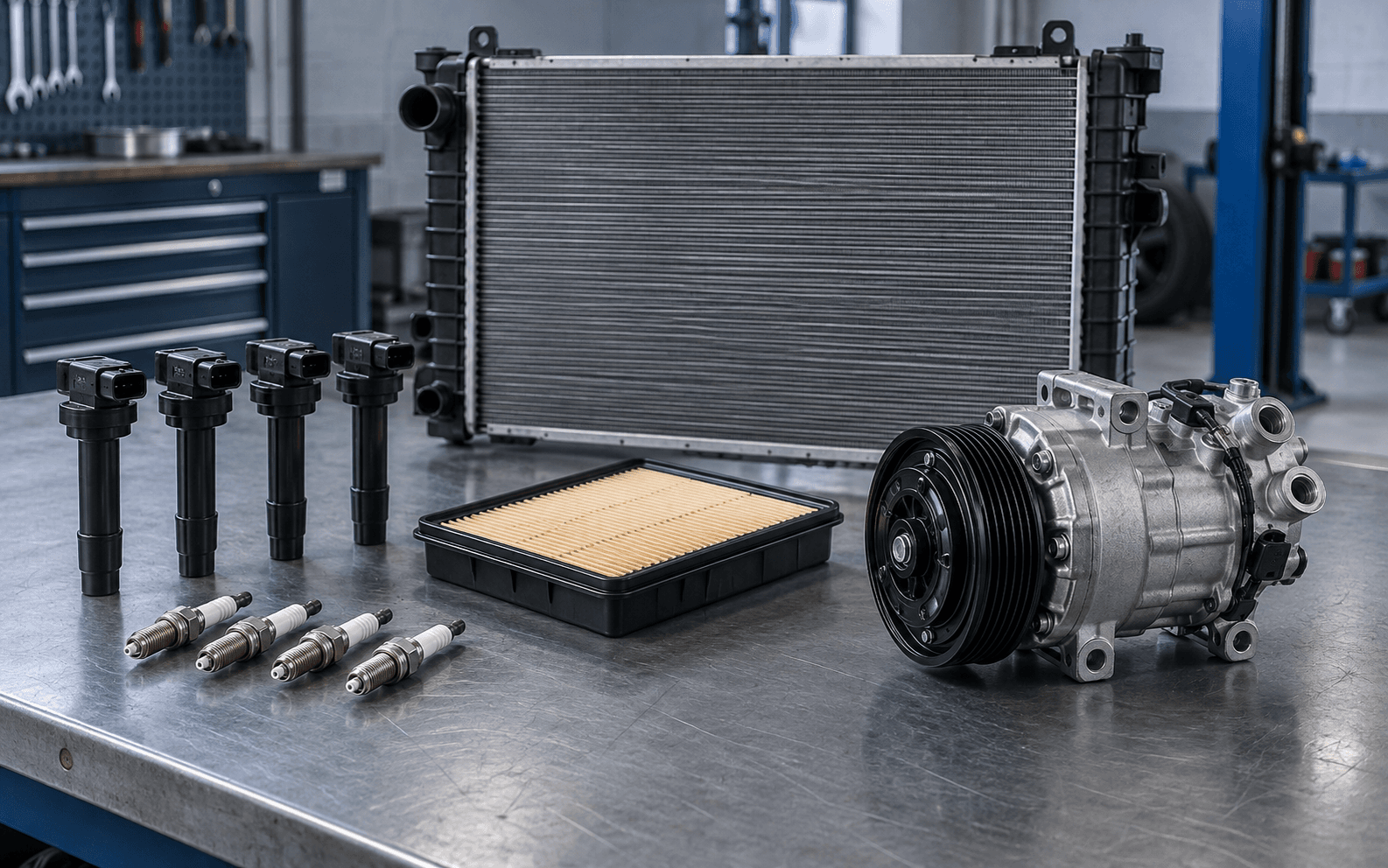
To order BYD ATTO 3, DOLPHIN or SEAL parts, provide the VIN, exact model designation, market, build date, battery and drive configuration, complete OE reference and part photos. Keep DOLPHIN versus DOLPHIN SURF and SEAL versus SEAL U as separate applications unless authoritative data confirms a specific cross-reference.
Short answer: keep every BYD model and market configuration separate
To order BYD ATTO 3, DOLPHIN or SEAL parts for an export-market vehicle, provide the full VIN, exact model designation, original sales market, production date, battery or drive version, complete OE reference and photographs of the existing component. State the side or axle and what must be included in the assembly. Do not combine DOLPHIN with DOLPHIN SURF, or SEAL with SEAL U, unless a controlled part-specific source confirms the exact cross-reference.
The naming distinction matters because official regional lineups present these as separate vehicles. The BYD Europe model range is useful for confirming current model identities, but a marketing page is not a parts catalogue. A distributor still needs a vehicle-specific service reference, production condition and physical comparison before approving a replacement.
This guide is written for importers, distributors and repair-network buyers building BYD service-parts enquiries. It covers identification, quotation and shipment preparation, not high-voltage repair instructions. Battery, restraint, braking and other safety-related work requires authoritative service data, trained personnel and destination-market compliance review.
The identity record every BYD RFQ should contain
Create one row per requested part and keep these fields beside it:
- Full 17-character VIN and a clear source photograph where permitted.
- Exact model: ATTO 3, DOLPHIN or SEAL, including any regional qualifier.
- Original sales market and destination country.
- Physical production month or date and model year.
- Battery, motor, single- or dual-motor and driven-axle information as relevant.
- Charging-market specification when the request involves charging or high-voltage equipment.
- Complete OE number and its source.
- Product position: front/rear, left/right, axle, cabin or underbody location.
- Label, connector, mount, port and installed-position photographs.
- Required quantity, assembly boundary, packaging and documentation.
If a buyer cannot provide every field, mark the missing information. The supplier can then explain which one is decisive for the requested category. An unresolved line should remain pending rather than being filled by a visually similar catalogue result. The VIN and OE number matching guide provides a reusable evidence workflow.

BYD ATTO 3 parts: what to confirm
The official BYD ATTO 3 information identifies it as a battery-electric SUV, but regional equipment and production revisions still need to be controlled for service parts. Start with the BYD ATTO 3 parts sourcing page, then add the category details below.
For brake and suspension parts, confirm axle, side, disc or caliper package, wheel-end interfaces, drive layout and production date. Record whether an electronic parking-brake component, sensor or hardware kit is included. Similar-looking pads, discs or arms should be compared by geometry and system reference rather than vehicle name alone.
For thermal-management parts, identify the circuit and assembly. A radiator-like heat exchanger may belong to cabin cooling, battery conditioning, power electronics or another loop. Confirm dimensions, ports, mounts, sensors, valves and included hoses. Do not order from a generic “ATTO 3 cooling part” description.
For lamps, mirrors and body parts, confirm market, side, connector, camera or warning functions and production condition. Body panels may require a statement of bare, primed, painted or accessory-included scope. Transport packing must protect visible surfaces and fragile mounts.
For charging or electrical service parts, record the complete hardware reference and market specification. Connector appearance does not establish functional compatibility. Coding, calibration, firmware and safety procedures may apply; obtain qualified technical review before purchase and installation.
BYD DOLPHIN parts: avoid the DOLPHIN SURF naming trap
The official European range distinguishes DOLPHIN from DOLPHIN SURF. Buyers should therefore treat the names as separate vehicle identities, not trim levels in one universal application. The BYD DOLPHIN model page provides model context, while the PartDorin DOLPHIN parts page lists the identity fields needed for a sourcing request.
Record the market, build date, battery or motor version, brake package and wheel-end configuration. For a front suspension or steering part, check mount geometry, ball-joint or bushing interface, side and sensor provision. For a hub or bearing, add bolt pattern, dimensions and speed-sensor features where applicable.
Cabin and exterior parts can also differ by market and equipment. For a mirror, list heating, power-fold, camera, memory and warning functions. For a lamp, list side, function, connector and approval markings relevant to the destination. For a window regulator or door part, add body position and steering-side-related features.
If the customer describes the vehicle only as a “Dolphin,” request a photograph of the vehicle badge or registration model together with the VIN. Do not resolve the ambiguity from body color, wheel design or an online listing. Preserve the exact regional name in the quotation and carton description.
BYD SEAL parts: separate the sedan from SEAL-branded SUVs and hybrids
SEAL is used in a broader product family in some markets. A request for “Seal parts” must identify the exact body and official regional designation before any OE search. Keep SEAL sedan, SEAL U and other SEAL-branded products as separate applications. The BYD SEAL parts sourcing page begins with this distinction.
For the SEAL sedan, record single- or dual-motor layout, driven axle, battery or edition, brake package, market and production date. Drive layout can affect shafts, hubs, suspension, underbody parts and some cooling or electrical components. A performance-oriented brake package should not be assumed from an exterior trim name.
For body and glazing parts, confirm the complete body style, side, camera or sensor provision and trim. Windscreens and bumpers can interact with ADAS components and may require calibration or market-specific features after replacement. Use qualified procedures rather than treating the visible panel as an isolated part.
For electronic modules and sensors, ask whether programming, pairing or calibration is required and whether the offer is new, remanufactured or used. A hardware number may not establish software compatibility. The quotation should not promise plug-and-play installation without part-specific evidence.
Mechanical and chassis ordering checklist
For brakes, suspension, steering and wheel-end parts, send:
- VIN, market, build date and exact model.
- Axle, side and product position.
- OE number and photographs of all markings.
- Key dimensions or a controlled drawing when they decide fitment.
- Connector and sensor details for electronic parts.
- Included hardware, brackets, clips, boots or fasteners.
- Required test, inspection and destination-market documentation.
Braking and steering components are safety-relevant. Compare the application, interfaces and approved evidence, not just the overall shape. A supplier’s broad “fits BYD” statement is not a technical baseline. The buyer should determine which dimensions, functional checks and regulatory evidence are appropriate for the destination market and product.
For dampers and control arms, identify whether the order is one piece, one side pair or an axle set. For hubs and bearings, clarify whether the sensor, ring, bolts or flange is included. For brake calipers, specify left/right, carrier, actuator and hardware scope. These commercial details often explain large quotation differences.
Thermal-management and HVAC checklist
EV thermal parts require the system context. Name the component and circuit rather than using a broad term such as “cooler.” Provide port orientation, core or housing dimensions, mounting photographs, valve or sensor details and the expected included parts. State whether the request is for a complete module or one service component.
For an electric compressor, confirm the exact reference, vehicle and voltage/system context. Electrical connector, refrigerant ports, mounting and controller configuration matter. Refrigerant handling and high-voltage isolation must be performed by qualified personnel under applicable procedures.
For condensers, radiators, chillers and heat exchangers, protect fins, ports and sealing surfaces in packing. Agree clean caps and accessory bags before production. Shipment inspection should check fin condition, port protection, identity label and carton support rather than only counting boxes.
Charging, electrical and electronic checklist
Use a higher evidence threshold for charging, high-voltage and control parts. Record:
- Exact vehicle and original charging market.
- Complete hardware and service references.
- Connector photographs, keying and pin configuration.
- Voltage and system function from authoritative data.
- Software, coding, pairing or calibration conditions.
- New, remanufactured or used status.
- Required safety, dangerous-goods and transport controls.
Do not open, energize or test high-voltage components without trained personnel and appropriate equipment. A general supplier inspection cannot replace vehicle-level diagnosis. If a workshop has not confirmed which component caused a fault, the buyer should not use parts sourcing as a substitute for diagnosis.
The same caution applies to low-voltage modules. A connector match and identical housing can conceal different software or equipment configuration. Ask for a written application condition and any installation requirement before commercial release.
Share the reference, vehicle application and target quantity so the technical and packing questions can be reviewed against your actual order.
Upload Your RFQBody, lamp and cabin checklist
For body panels, bumpers and trim, identify exact body, side, sensor holes, camera or radar provisions, washer openings, tow-hook covers, finish and included brackets. If color is required, define the color reference and acceptance method. Photographs on different screens are not a dependable color standard.
For lamps, record market, traffic side, lamp position, function, connector and approval requirement. A lamp that bolts into the body may still be unsuitable because beam or signaling functions differ. For mirrors, list heating, folding, memory, camera, warning indicator and connector.
For doors, windows, regulators, switches and cabin parts, add steering side and equipment. Specify whether glass, motor, lock, wiring, switch or trim is included. Large and fragile parts require category-specific packing; do not use a standard carton designed for compact mechanical components.
A category-by-category evidence plan
Use the following approval logic:
- Filters and routine service items: vehicle identity, OE reference, dimensions or media interface as relevant, sample and label control.
- Mechanical chassis items: application, axle/side, dimensions, mounts, material or test scope appropriate to the part.
- Electrical service items: application, connector, function, voltage and any coding or calibration condition.
- Thermal parts: circuit, ports, mounts, dimensions, cleanliness, leakage or functional checks appropriate to the item.
- Body and lighting: body/side, market function, mounts, connectors, finish and fragile packing.
- High-voltage, restraint and safety systems: authoritative data, competent technical authority, trained installation and market-specific compliance.
The evidence should be proportional to risk. Collecting irrelevant documents does not make an unclear fitment safer. First define the vehicle and product, then request the records that prove the characteristics important to that category.
A copy-ready BYD parts RFQ template
For each line, provide:
- Buyer SKU / line number:
- Exact model and regional designation:
- VIN / production date / original market:
- Battery, motor, driven axle and edition:
- OE reference and source:
- Part name, position and assembly boundary:
- Attached label, connector, mount and overall photos:
- Quantity and target quality position:
- Individual and master-carton requirement:
- Destination country and required documentation:
- Open technical questions:
Ask the supplier to return its part number, confirmed model condition, cross-reference, exclusions, included accessories, sample or drawing availability, inspection basis, MOQ, lead-time assumptions and packing. Require uncertainty to be marked. The automotive RFQ guide can be used for a multi-category spreadsheet.
Sample approval and factory testing
A sample review should begin with identity. Compare the label, part number, vehicle condition and physical interfaces against the approved line. Define product-specific checks: dimensions for a disc, connector and function for a service electrical item, port geometry and leakage method for an applicable thermal component, or mounting and accessory content for a body part.
“Factory tested” must be explained. Ask what characteristic was tested, by which method, on what sample size and against which acceptance criterion. A bench function check is not the same as vehicle installation validation. Do not expand a sample result from one VIN or market to every vehicle sharing the badge.
If a product changes after approval, the supplier should identify the revision and its effect. The buyer can then decide whether a document review, new sample or vehicle-level validation is needed. Silent substitution weakens the entire fitment record.
Shipment inspection for mixed BYD orders
Build the inspection sheet from the approved purchase-order lines. Select cartons across the lot and verify buyer SKU, supplier number, OE cross-reference, model condition, side, quantity, accessories and packing. Photograph product marking, inner label and master carton in one traceable sequence.
Keep ATTO 3, DOLPHIN and SEAL lines physically and digitally separated. Use distinct carton labels even if two parts appear similar. For fragile or heavy items, inspect protective supports, caps, separators, surface protection and pallet stability. For electrical parts, protect connectors and follow appropriate handling rules.
Before dispatch, reconcile the packing list with the purchase order. A shipment inspection cannot correct an unclear original application, but it can prevent mixed references, missing accessories and incorrect labels from leaving the warehouse.
Common BYD ordering errors
- Entering “BYD Dolphin” without confirming DOLPHIN versus DOLPHIN SURF.
- Entering “Seal” without identifying SEAL sedan, SEAL U or another regional product.
- Omitting battery, motor, driven axle or production date from an EV request.
- Ordering a thermal part without naming its circuit and ports.
- Assuming a connector match proves an electronic module will function.
- Quoting a lamp or mirror without destination-market functions.
- Comparing prices without checking whether brackets, sensors or hardware are included.
- Mixing approved and unconfirmed cross-references in one catalogue SKU.
Correct these issues before the order is released. A short clarification at RFQ stage is less costly than wrong stock, workshop delays or a catalogue correction after sale.
FAQ
Are BYD ATTO 3 parts the same in every country?
Do not assume so. Production revisions and regional specification can affect lamps, connectors, charging-related parts, modules, trim and other items. Confirm the VIN, original market, build date and part-specific reference.
Can DOLPHIN SURF be treated as a DOLPHIN trim?
No for sourcing purposes. Official regional model ranges distinguish the names. Keep them as separate applications unless authoritative part-specific data proves a defined cross-reference.
Are SEAL and SEAL U parts interchangeable?
They are separate vehicle applications. Some individual parts may share references, but that must be confirmed line by line. Never transfer a broad SEAL fitment statement to SEAL U.
What should accompany a BYD OE number?
Send the VIN, exact model, market, production date, battery or drive configuration, position, label and interface photos, quantity and assembly scope. State where the OE number was obtained.
Can PartDorin supply high-voltage installation instructions?
This sourcing guide is not a repair manual. High-voltage diagnosis and installation require authoritative service information, trained technicians, suitable PPE and tools, isolation procedures and local compliance.
Conclusion: make the vehicle condition part of every order line
BYD ATTO 3, DOLPHIN and SEAL parts can be sourced more reliably when every line carries its own vehicle identity, OE evidence and technical scope. Separate regional names, record the EV configuration, compare the interfaces that matter, state unresolved questions and keep the approved condition visible through packaging and shipment inspection.
PartDorin is an independent B2B sourcing and manufacturing-support company and is not affiliated with or authorized by BYD. To prepare a distributor order, send your BYD VINs, OE numbers, quantities and destination market. We can organize the list by model, identify missing fitment evidence and prepare a controlled quotation scope.
Discuss the requirements for your next order.
Send your part references, vehicle applications, target quantities, destination market and any inspection or packing priorities. PartDorin will review the information needed for a focused quotation.
Send Your Requirements