 PartDorinUpload RFQRFQ
Brake master cylinder sourcing guide for importers
Master cylinders are safety-relevant hydraulic components whose bore, port circuit and booster interface must match the vehicle design.
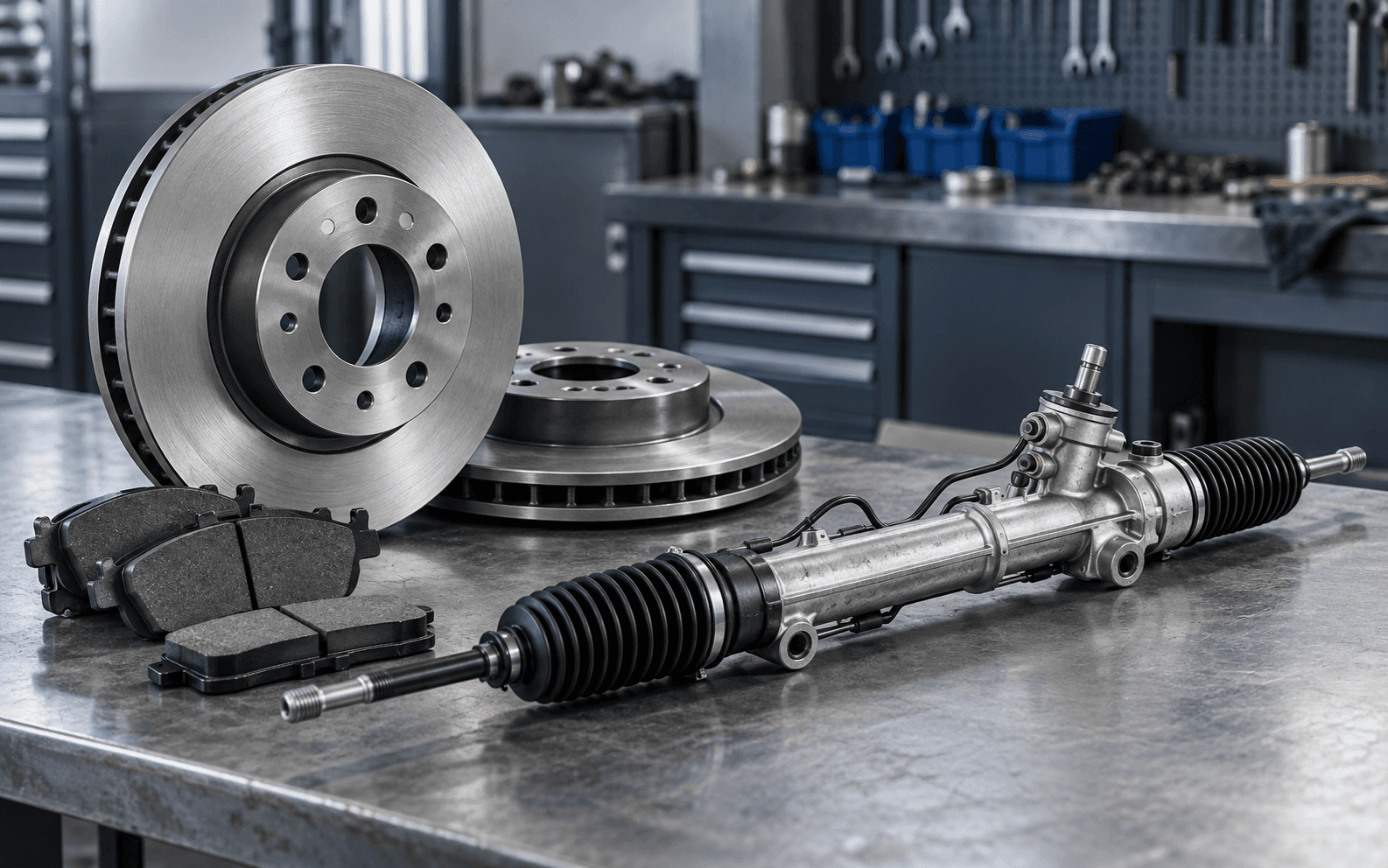
Source brake master cylinders by vehicle and brake-system variant, then confirm bore, stroke, mounting flange, pushrod interface, outlet count, thread and circuit orientation, reservoir and level sensor, seals and included hardware. Require defined pressure, leakage and return-function checks.
Introduction
Master cylinders are safety-relevant hydraulic components whose bore, port circuit and booster interface must match the vehicle design. For an overseas distributor, the practical question is not whether a supplier can show a similar photograph. It is whether the supplier can connect brake master cylinder identity, technical evidence, production controls and packed shipment to the same approved reference.
This brake master cylinder guide is written for importers, distributors, private-label programs and repair-parts buyers comparing international supply. It focuses on procurement decisions: application data, drawing or sample review, factory testing, shipment inspection, product application and installation preparation. It does not replace vehicle-manufacturer service information, engineering approval or destination-market legal advice.
Price differences are difficult to interpret when suppliers use different assumptions about application, accessories, testing or product status. The buyer should keep confirmed facts, supplier proposals and unresolved assumptions in separate fields so that a low price does not hide a different hydraulic circuit and bore configuration.
Direct sourcing answer
Source brake master cylinders by vehicle and brake-system variant, then confirm bore, stroke, mounting flange, pushrod interface, outlet count, thread and circuit orientation, reservoir and level sensor, seals and included hardware. Require defined pressure, leakage and return-function checks.
The shortest reliable purchasing rule is to freeze the application and interfaces first, the evidence second, and the commercial order third. A candidate remains a candidate until the differences from the approved brake master cylinder are understood. That discipline supports clearer RFQs, more useful sample approval and faster investigation if a customer later reports a problem.
Define the exact product and application
Build one controlled identity record for every sellable line. Vehicle model and a shortened cross-reference are rarely enough because production breaks, engine or system options and regional configurations can change the correct brake master cylinder. Record the source and date of application information, and distinguish confirmed coverage from a supplier's unverified suggestion.
- Confirm vehicle, brake system, ABS/ESC context and production break.
- Confirm bore diameter, usable stroke and piston arrangement.
- Confirm booster flange, pushrod pocket and mounting datums.
- Confirm outlet count, thread, seat and circuit position.
- Confirm reservoir, grommets, level sensor, caps and hardware.
Brake master cylinder photographs should reveal the features that separate neighboring references, with more than one angle and a file name connected to the buyer SKU. Use PartDorin's OE-number guide when building the cross-reference file. If a supplier proposes a supersession, retain both numbers and document why the new version is acceptable.
Brake master cylinder scope also needs plain language. State whether the offer is a bare component, a complete assembly or a kit, then list accessories as included or excluded. This prevents a sample photograph, quotation and final carton from silently describing three different scopes.
Technical decisions that change fitment or function
The technical review should concentrate on interfaces and characteristics that can change installation, function or compliance. For this brake master cylinder, the following questions are more useful than broad claims such as “premium quality” or “OEM standard.”
- Seal materials must suit the specified brake fluid and manufacturing cleanliness requirements.
- Pressure leakage tests need defined circuits, pressure levels, dwell time and acceptance.
- Piston return and compensation-port behavior affect system release.
- Port thread and sealing-seat geometry should be verified together.
- Internal cleanliness cannot be inferred from a clean exterior.
- Safety claims require product-specific evidence and target-market compliance review.
Each brake master cylinder value needs context: datum, condition, method, tolerance and product revision. A result without those elements is difficult to compare. Equally, one successful bench check should not be presented as proof of complete vehicle-system performance. Buyers should ask what the test actually demonstrates and what remains dependent on the vehicle, installation or operating environment.
For brake master cylinder, the primary external reference used for this topic is the UNECE passenger-car braking regulations. It gives regulatory or quality context; it does not automatically certify a PartDorin product or replace a market-specific conformity assessment.
Make supplier quotations comparable
Normalize the brake master cylinder selling unit, product status, accessory content, packaging, MOQ, tooling, sample charges, lead-time start, inspection scope and warranty handling before comparing unit price. Ask the supplier to place every exception beside the affected line rather than in a general email.
For this brake master cylinder, the RFQ should carry the controlled application record and the critical configuration above. Quote new, remanufactured and rebuilt products separately where those categories exist. State whether private-label artwork, barcodes, inner packaging, pallets and order-specific test records are included.
For brake master cylinder orders, use a current Incoterms rule with a named place for freight-related comparison, while remembering that the trade term does not define product quality, payment, title or every contract obligation. Start lead time at a named gate such as final technical and artwork approval. For a mixed order, confirm which SKU controls the schedule and use approved packed weights for landed-cost planning.
Approve samples with stated limits
Brake master cylinder sample approval should describe exactly what was checked and what was not. Mark the retained record with supplier reference, buyer SKU, revision, application, date and reviewer. A visual pass is not a universal functional approval.
- Measure bore-related external references, flange and pushrod interface.
- Verify every port thread, seat and circuit position.
- Perform staged pressure and leakage checks.
- Check piston movement and return with an approved method.
- Inspect clean caps, reservoir and sensor contents.
If a workshop or laboratory evaluates brake master cylinder, identify the item, equipment, method, operating conditions and acceptance limits. Reports for another size, application or production revision should remain supporting context rather than being relabeled as proof for the quoted SKU.
When a brake master cylinder sample cannot be tested safely without a vehicle-specific fixture or specialized equipment, record that limitation. It is more trustworthy to describe a bounded review than to imply a test that did not occur.
Review factory testing and change control
Brake master cylinder process evidence is strongest when the supplier can retrieve the current specification, work instruction and result for the selected reference. Ask who owns the technical master, which operations are internal, what is outsourced and how nonconforming material is contained. Trace the approved sample or drawing to a work order and then to the label on a finished pack.
Brake master cylinder factory testing should be selected because it controls a plausible failure mode. Review calibration status, sampling logic, acceptance limits, result retention and reaction to failure. “100% tested” is incomplete unless the supplier defines the test, the limit and how failed pieces are prevented from re-entering production.
Change control matters after approval. Define which changes require buyer notice, including design, sub-supplier, material, electronics, tooling, production site, test method, marking or packaging. A stable commercial number should not conceal a changed brake master cylinder configuration.
For brake master cylinder, management-system certificates can support a supplier assessment, but they do not prove product-specific capability. Confirm the certificate's scope and status, then rely on the records for the actual part and process.
Plan shipment inspection around failure risk
Final brake master cylinder inspection cannot repair an unclear specification, but it can prevent a defined mismatch from leaving the factory. Connect every selected carton or item to the purchase-order line, lot or shipment reference, then record quantity checked, observations, photographs and disposition.
At minimum, verify keep bores and ports clean and capped, inspect flange and threads, verify reservoir content, labels and protected packing. The sample size and method should be proportionate to the category, customer requirement and consequence of failure. Safety-relevant or highly variant-sensitive parts justify stronger identity controls than a simple carton count.
Run brake master cylinder inspection after the final production operation and, where packaging can load, contaminate or confuse the part, examine representative finished packs. If a requirement is still unclear, hold the affected line for written disposition rather than asking the inspector to invent an acceptance criterion.
For brake master cylinder, see the PartDorin quality and manufacturing pages for the broader document-control context. Shipment photos should show the relevant interface, label, selling unit, master carton and final pallet or crate—not only a wide warehouse view.
Share the reference, vehicle application and target quantity so the technical and packing questions can be reviewed against your actual order.
Upload Your RFQProtect the product in export packing
Brake master cylinder packing design should respond to mass, geometry, cleanliness, finish and vulnerable interfaces. Immobilize the product inside its sellable pack, separate hard or sharp features, and prevent accessories from striking the main part. Heavy assemblies need carton and pallet support; sensors and electronic parts need clean connector and sensing-end protection.
Challenge the proposed brake master cylinder pack with the most demanding variant in the range. Review stack height, moisture exposure, handling orientation and destination receiving method. Labels should remain readable after stretch wrapping and should identify the buyer SKU without making unsupported compliance or performance claims.
For brake master cylinder, reconcile packed quantity with the packing list before loading. Where transport classification or special handling applies, use qualified carriers and documentation rather than assumptions.
Prepare installation and customer support information
Brake master cylinder procurement content should help a professional identify the right part and prepare the job; it should not publish one universal repair procedure across vehicles. State what the box contains, the approved application boundary and any need for diagnostics, coding, calibration, bleeding, cleanliness, single-use hardware or specialized tools.
For brake master cylinder, avoid universal torque, fluid, voltage, gap, programming or reuse instructions. Direct installers to authoritative vehicle- and product-specific service information. Catalogue copy should separate verified facts from supplier claims, especially for safety, durability, emissions and regulatory language.
Returns become easier to diagnose when customer support requests the vehicle, application, installation date, observed condition, fault information where appropriate, photographs, packaging and lot reference. Do not assume a returned brake master cylinder is defective before fitment, related systems and installation preparation are reviewed.
Common sourcing failures and prevention
These are recurring procurement risks for brake master cylinder programs:
- Front and rear circuits are connected to different port positions.
- Metric and imperial-looking threads are confused.
- Reservoir is pictured but excluded.
- Test fluid or debris remains inside the bore.
- A generic pressure certificate is reused across variants.
When a brake master cylinder mismatch is reported, preserve the part, labels, package and shipment identity. Write the expected requirement separately from the observed condition. Corrective action should reach the control that allowed the issue—application data, drawing, component approval, assembly, testing, label mapping or packing—not stop at refunding one claim.
The central risk boundary is clear: Matching flange and bore do not prove correct circuit orientation, stroke, port threads or seal compatibility. This statement should guide both catalogue language and the questions asked before a repeat order.
Build a controlled first order and range launch
For a first purchase, choose a focused application set that the buyer can verify thoroughly instead of stretching the same evidence across a large catalogue. Rank brake master cylinder references by customer demand, availability of reliable application data, technical variation and consequence of a mismatch. A smaller approved range creates better information for replenishment than a wide launch built on copied cross-references.
Set the brake master cylinder pilot quantity only after packed unit, MOQ, production batch, inspection access and replenishment lead time are understood. Keep one approved reference record for each line and make the warehouse receive against that record. When two versions are visually close, use separate shelf locations and scannable buyer SKUs rather than relying on memory.
Before expanding the range, review quotation questions, sample deviations, factory findings, incoming observations, customer enquiries and returns. Classify each issue as application, product, packaging, installation or documentation. That classification prevents a correct brake master cylinder from being redesigned to solve a catalogue error, and it prevents a real product issue from being dismissed as installation without evidence.
Agree how future additions will be approved. New references should pass the same identity, evidence and release gates instead of inheriting approval from a neighboring item. This keeps hydraulic circuit and bore configuration visible as the program grows.
Worked procurement scenario
A distributor receives two offers for the specified brake master cylinder. Both use convincing product photographs, but only Supplier A confirms vehicle, brake system, ABS/ESC context and production break and bore diameter, usable stroke and piston arrangement. Supplier B provides a general cross-reference and asks the buyer to accept fitment based on appearance. The buyer keeps Supplier B in clarification rather than treating the lower price as a comparable quote.
During sample review, the team focuses on this technical point: Seal materials must suit the specified brake fluid and manufacturing cleanliness requirements. The record then requires the following verification: measure bore-related external references, flange and pushrod interface. This separates identity, engineering evidence and sample observation instead of collapsing them into a single “approved” label.
Before shipment, inspection is written around a plausible failure: front and rear circuits are connected to different port positions. The released photos connect the physical part, label and packing to the buyer SKU. If a later return occurs, the support team can compare it with the approved configuration and shipment record.
This scenario is illustrative and does not claim a completed PartDorin delivery. It shows how hydraulic circuit and bore configuration can move from search query to documented purchase without inventing performance results.
Step-by-step procurement workflow
- Application gate: confirm the vehicle, system, destination market and exact product position.
- Identity gate: connect buyer SKU, supplier reference and the interfaces that distinguish the approved variant.
- Commercial gate: align sellable contents, status, MOQ, packaging, timing and declared exceptions.
- Evidence gate: review drawings, methods, results and limits that apply to the exact brake master cylinder.
- Sample gate: retain observations, revision, limitations and any accepted deviation.
- Production gate: approve process controls, change notice, label mapping and rejected-goods handling.
- Shipment gate: preserve inspection and packed-condition evidence for the released lot.
- Feedback gate: classify enquiries and returns, then update catalogue, packing or supplier controls.
This brake master cylinder workflow cannot guarantee a defect-free order. It makes unresolved risk visible and keeps purchasing decisions traceable to the evidence available at each gate.
FAQ
Can master cylinders be selected by bore size?
No. Stroke, flange, pushrod, circuit ports, reservoir and brake-system variant also matter.
Why cap hydraulic ports?
Caps help protect cleanliness and threads during storage and shipping; installation still requires professional procedures.
What should leakage testing record?
Circuit, pressure, dwell time, medium, acceptance limit and product or lot identity.
Does the quote include a reservoir?
Not unless explicitly stated; reservoir, sensor, grommets and caps should be itemized.
Who should install a master cylinder?
A competent professional following vehicle-specific service, bleeding and diagnostic procedures.
Conclusion
Successful sourcing of brake master cylinder depends on a controlled application, a precise view of hydraulic circuit and bore configuration, product-specific evidence, bounded sample approval and a shipment release that preserves identity through packing. The best supplier comparison is not the longest catalogue or the lowest isolated price; it is the clearest match between requirement, evidence and delivered scope.
For a focused brake master cylinder review, send PartDorin your references, applications, quantities and destination market. Include photographs, drawings, current samples and any testing, private-label or shipment-inspection priorities that could change the quotation.
Discuss the requirements for your next order.
Send your part references, vehicle applications, target quantities, destination market and any inspection or packing priorities. PartDorin will review the information needed for a focused quotation.
Send Your Requirements