 PartDorinUpload RFQRFQ
Automotive A/C compressor sourcing guide for importers
An A/C compressor can bolt to an engine and still have the wrong ports, pulley, clutch, control valve or displacement for the vehicle.
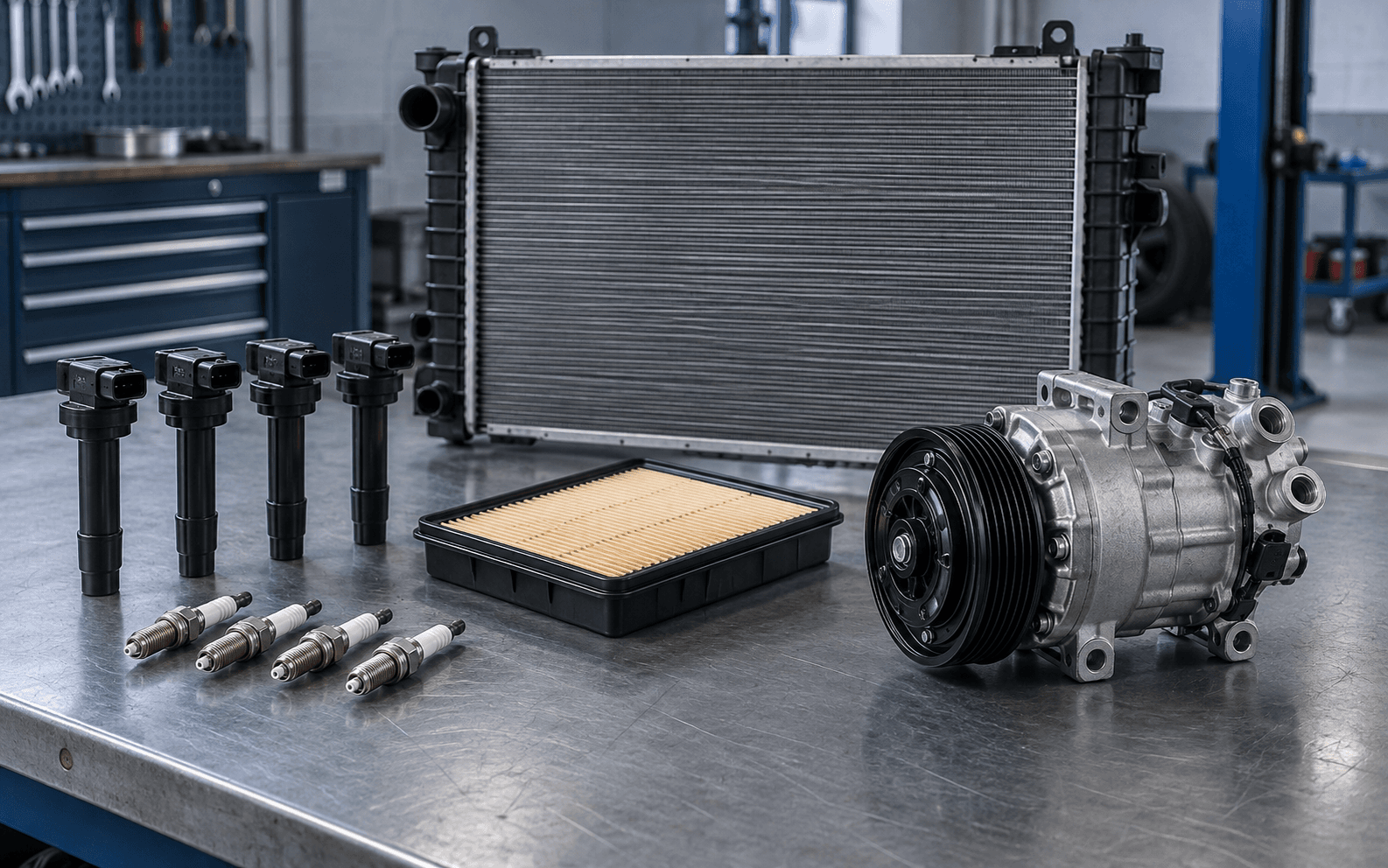
Source an automotive A/C compressor using the exact vehicle and compressor code plus mounts, ports, pulley, clutch or control valve, connector and refrigerant/oil context. Define product-specific leakage or function checks and protect every port.
Introduction: define the decision before comparing price
An A/C compressor may bolt to the engine yet remain unsuitable because the pulley, clutch, control valve, ports, displacement or refrigerant/oil context differs. Contamination from the failed system can also damage a correct replacement, so sourcing and installation preparation must be separated but connected.
This guide is written for climate-control parts importers and distributors. Its purpose is to help a buyer match compressor design, clutch or control valve, ports, oil and refrigerant context before purchase. It is a procurement framework, not a substitute for vehicle-manufacturer service information, qualified engineering review or destination-market legal advice.
Practical sourcing answer
The safest commercial comparison begins after the application, compressor interface and control, sellable contents, evidence and packing all point to the same an automotive A/C-compressor program. Use a controlled reference for approval, and require the production and shipment records to identify that version. A visually similar alternative should remain a candidate until its differences are reviewed.
It turns open questions into visible approval gates.
Build the product-identity record
Product naming is useful only when it points to one controlled configuration. For an automotive A/C-compressor program, keep confirmed applications separate from possible cross-references and record the source and date of each decision.
- Vehicle, engine, market and production range: HVAC and engine accessory layouts can vary.
- Compressor family and supplier reference: capture the full housing or label code.
- Mounting ears and port layout: photograph both the bracket face and suction/discharge connections.
- Pulley diameter, groove count and clutch configuration: identify belt and engagement interface.
- Control type and connector: distinguish clutch, control valve and variable-displacement features.
- Refrigerant and oil context: record what the vehicle system specifies without making a universal fill recommendation.
Photographs of an automotive A/C-compressor program should reveal the features that separate it from a neighboring reference. Use multiple angles, connect each file to one line item and define any measurement condition. The related PartDorin resource gives additional context for the information handoff.
Carry the identifiers for compressor interface and control through the RFQ, sample record, purchase order, product label and receiving file. When a supplier proposes a supersession, retain the old-to-new relationship and record why the replacement is acceptable for this application.
Compare the technical configuration that changes fitment
A product-specific review should expose hidden variant risk. The following points deserve explicit confirmation for an automotive A/C-compressor program:
- Similar housings can contain different displacement or control-valve calibrations.
- Connector shape and pin count must be confirmed together with the electrical control strategy.
- Port angle and manifold sealing surfaces affect hose fit even when mounting ears match.
- Pulley alignment, diameter and groove count influence the accessory drive interface.
- The supplied oil type and quantity must be stated carefully and reconciled with service procedure.
- A compressor warranty process should capture evidence of system flushing, component replacement and contamination control where relevant.
Evidence for compressor interface and control is useful only when method, limit, product scope and revision are identifiable. Descriptions such as “standard,” “heavy duty” or “OEM quality” do not create a measurable requirement for an automotive A/C-compressor program; use a drawing, applicable standard, approved reference or qualified engineering decision.
Before comparing a value on an automotive A/C-compressor program, define its datum, condition and measurement method. Flexible, articulated, electrical or safety-related configurations need different review approaches, and a convenient bench check should not be promoted as validation of the whole vehicle system.
Make quotations commercially comparable
A price advantage can disappear when accessories, evidence or freight scope are aligned. Align the selling unit, accessories, packaging, private-label work, MOQ, approval evidence, lead-time starting point and inspection scope for an automotive A/C-compressor program.
Require assumptions and exceptions to sit beside the affected an automotive A/C-compressor program line. Confirm the status of tooling, samples, artwork, special packing, pallets and order-specific records; a product photograph cannot define contents that the written quotation leaves open.
Use the current Incoterms rule with a named place when requesting a delivered or freight-related offer. US EPA motor-vehicle A/C resources is the primary external reference linked for this topic. The trade term allocates particular delivery costs, risks and obligations; it does not settle product quality, payment, title or every contract issue.
Start the quoted lead time for an automotive A/C-compressor program at a named gate, such as final technical and artwork approval. In a mixed order, verify the limiting SKU and use approved packed dimensions and weights for the final landed-cost view.
Approve the sample and factory control plan
Freeze the approved version before production scheduling. Mark the approved an automotive A/C-compressor program with supplier number, buyer SKU, revision, date and application. Record distinguishing views, included parts and any limitations on the review.
- Compare mounting, ports, pulley and connector to the approved sample or controlled drawing.
- Ask how leakage, rotational, clutch or control-valve checks apply to the quoted design.
- Verify transport caps are clean, secure and compatible with the ports.
- Record label, lot and supplied oil statement before samples are released.
- Use competent HVAC personnel for any vehicle evaluation and refrigerant handling.
Select factory controls for the way an automotive A/C-compressor program is made and for the consequence of a failed characteristic. Review receipt of material or subcomponents, in-process work, final inspection, rejected-goods containment and change handling. Any tolerance placed on the approval record needs a legitimate technical source.
When a laboratory or workshop contributes to compressor interface and control, state exactly what it evaluated. A fitment, bench test or report on one version does not automatically validate every catalogue application or later production change.
Questions to ask during a supplier review
Evaluate retrieval, containment and change communication with a real example. For an automotive A/C-compressor program, ask who owns the technical master, which site performs each operation, what is outsourced and how a change reaches the buyer before production.
Trace the approved an automotive A/C-compressor program sample or drawing into a work order, retrieve the current revision, examine rejected-material segregation and identify who may authorize rework. Then compare the finished label with the physical item. A recent example, with confidential details redacted when necessary, is more informative than a generic capability slide.
The answer should name records and responsibilities rather than rely on slogans. A management-system certificate provides context, but it does not show that compressor interface and control is correct for a particular SKU. Conversely, a small pilot may justify a proportionate review rather than a full system audit.
Before volume grows, define which an automotive A/C-compressor program changes need buyer notice: material or component source, tooling, process, marking and packaging are typical candidates. This prevents an approved configuration from changing silently under the same commercial number.
Share the reference, vehicle application and target quantity so the technical and packing questions can be reviewed against your actual order.
Upload Your RFQPlan shipment inspection around real failure risk
Use the approved baseline to decide what the inspector must see and record. For an automotive A/C-compressor program, record purchase-order line, production or shipment identifier, inspection scope, observations, photographs and disposition.
- Seal every refrigerant port with secure clean protection.
- Restrain the compressor by strong housing areas, not connectors or pulley faces.
- Protect labels, clutch connectors and machined sealing interfaces.
- Keep the unit upright if required by the agreed product and transport procedure.
Run the selected an automotive A/C-compressor program checks after its final production operation. When packaging can load, contaminate or confuse the item, inspect a representative final pack as well. Quantity and carton appearance matter, but variant and product-to-label verification remain essential.
If compressor interface and control is still unspecified at loading, an inspector cannot invent the requirement. Hold the affected variant or deviation for written technical disposition. See this PartDorin page for the related quality or manufacturing context.
Protect the product through export and receiving
The carton, pallet and loading plan form one protection system. For an automotive A/C-compressor program, review individual protection, master-carton strength, pallet or crate restraint, marks and destination handling as one plan. The pack should protect the part without hiding the identity needed at receiving.
Challenge the proposed pack with the most demanding an automotive A/C-compressor program variant, whether that means mass, length, fragility or finish. Protect the clean interfaces and vulnerable features named in the approval file, and secure loose hardware to the correct SKU instead of letting it strike the product.
Release photographs for an automotive A/C-compressor program should show the protection detail, closed selling unit, master mark and final pallet or crate. Reconcile physical quantity to the packing list. If the article is regulated for transport, use qualified classification, marking, documentation and carrier acceptance.
Sample the arriving an automotive A/C-compressor program lot against the approved record before inventory is dispersed. The retained shipment or production reference helps customer service separate product, packing, warehouse, application and installation causes later.
Installation preparation and customer communication
Before launch, decide which warnings, calibration notes or service references customers need. For an automotive A/C-compressor program, tell the customer what the box contains, which application boundary was approved and whether specialized tools, diagnostics, calibration, regulated handling or professional installation may be involved.
Avoid a universal torque, fluid, gap, coding, refrigerant, calibration or hardware-reuse instruction for an automotive A/C-compressor program across multiple vehicles. Authoritative service information should govern the work, while procurement content can flag removed-part comparison, related system causes and required seals or single-use hardware.
Separate verified compressor interface and control facts from inference in catalogue copy. A material or technology name does not by itself prove service life, performance or compliance, and any approval identifier must stay connected to the exact SKU and destination-market scope.
Common sourcing failures and how to prevent them
These failure patterns are especially relevant to an automotive A/C-compressor program:
- A compressor is approved from bolt pattern while port angle or connector differs.
- A catalogue lists one unit across systems with different control valves.
- Transport plugs fall out and moisture or debris enters open ports.
- Sales material gives a fixed oil-addition instruction without system context.
- A return is labelled defective before installation cleanliness and system failure cause are documented.
After a an automotive A/C-compressor program mismatch, preserve the item, packaging, labels, lot identity and photographs before assigning cause. Write the expected requirement separately from the observed condition so the supplier receives a defined problem to contain and investigate.
Corrective action for compressor interface and control should reach the control that allowed the issue, whether application data, drawing revision, subcomponent approval, packing design or label verification. Refunding one complaint without strengthening that control leaves the replenishment order exposed.
Worked buying scenario: controlling compressor interface and control
A distributor comparing two offers for an automotive A/C-compressor program sees similar product photographs and different levels of evidence. Supplier A addresses the first identity requirement directly: “HVAC and engine accessory layouts can vary.” Supplier B provides only a broad catalogue match. The second offer remains in clarification because a price cannot compensate for an undefined variant.
The buyer records a foreseeable failure mode: “A compressor is approved from bolt pattern while port angle or connector differs.” The technical review then separates two questions. The product specification must account for this point: “Similar housings can contain different displacement or control-valve calibrations.” The sample plan must also demonstrate the following action: “Compare mounting, ports, pulley and connector to the approved sample or controlled drawing.” Quotation, product evidence and sample approval therefore remain separate gates instead of being collapsed into one sales decision.
Before dispatch, the team converts the category-specific packing requirement into a release check: “Seal every refrigerant port with secure clean protection.” The inspector links the observation to the buyer SKU and shipment reference. If a customer later reports a problem, support staff can compare the returned item with the approved version rather than reconstructing the decision from a product name.
This scenario is illustrative and does not describe a claimed PartDorin shipment. Its purpose is to show how compressor interface and control can move from an overseas buyer’s search to a documented order without inventing performance results.
A step-by-step procurement workflow
A concise handoff should answer seven questions before volume release.
- Market gate for an automotive A/C-compressor program: identify the destination, customer use and confirmed application boundary.
- Identity gate for compressor interface and control: connect buyer SKU, supplier reference and the features that separate the approved variant.
- Commercial gate for this order: align sellable contents, MOQ, packaging, timing, named place and declared exceptions.
- Approval gate for the chosen version: retain revision, checks, limitations and any formally accepted deviation.
- Production gate for an automotive A/C-compressor program: set process evidence, change notification, label mapping and rejected-goods control.
- Shipment gate for the released lot: preserve selected inspection results and final packed-condition evidence.
- Feedback gate after launch: classify enquiries and returns, then update the relevant catalogue, pack or supplier control.
This an automotive A/C-compressor program checklist cannot guarantee a defect-free order. It keeps unresolved risk visible and makes later decisions traceable to the evidence available at the time.
FAQ
Can an A/C compressor be selected by vehicle model?
Not reliably. Engine, production range, compressor code, mounts, pulley, ports and control configuration should be confirmed.
Why does the control valve matter?
Variable-displacement compressors can use different control characteristics or connectors even when the housing appears similar.
Should buyers specify refrigerant and oil?
Yes, as application context. Final servicing must follow vehicle- and compressor-specific information from competent sources.
What tests should a supplier describe?
Product-appropriate leakage, rotational, electrical, clutch or control checks, including scope and traceability to the quoted design.
What evidence helps a warranty review?
Vehicle and compressor identity, system diagnosis, installation preparation, contamination observations, replaced components and clear photographs.
Conclusion
Sourcing an automotive A/C-compressor program successfully requires a defined application, a controlled view of compressor interface and control, product-specific evidence, documented sample approval and a shipment release that preserves identity through packing. Compare suppliers on the same scope, and keep performance or compliance claims inside the boundary of verifiable records.
For a focused an automotive A/C-compressor program review, send PartDorin your part references, vehicle applications, target quantities and destination market. Include photographs, drawings and any inspection or private-label priorities that could change the quotation.
Discuss the requirements for your next order.
Send your part references, vehicle applications, target quantities, destination market and any inspection or packing priorities. PartDorin will review the information needed for a focused quotation.
Send Your Requirements